
From centralized generation to distributed energy systems
Electricity networks were traditionally designed around large, centralized power plants supplying consumers through transmission and distribution systems. Today, an increasing share of generation, storage and controllable demand is connected at different voltage levels throughout the network.
Distributed Energy Resources (DER) include solar and wind power plants, battery energy storage systems (BESS), decentralized generation and flexible industrial or commercial loads. These resources are no longer simply passive participants in the electricity system. Depending on their technical capabilities and grid connection requirements, they can actively influence power flows, voltage conditions and network operation.
This transformation creates new opportunities, but also introduces technical challenges. Variable generation, bidirectional power flows, changing load profiles and limited grid connection capacity require coordinated operation. Grid codes, protection concepts and technical connection requirements define how these resources must interact with the network.
The key challenge is not simply to generate energy closer to consumption, but to integrate distributed resources into the power system safely, reliably and efficiently.
Coordinating generation, storage and demand
Distributed energy systems often combine resources with very different operating characteristics. Solar and wind generation depend on weather conditions, battery storage can absorb or deliver power within its operating limits, and flexible consumers can adjust their demand according to operational requirements.
Coordinating these resources requires more than monitoring energy production and consumption. Energy management systems, power controllers and automation technologies perform different but complementary functions.
Energy management can optimize the use of available resources based on forecasts, energy requirements, operating schedules and economic objectives. Power control functions manage active and reactive power according to grid connection limits, external setpoints and the technical capabilities of the connected assets.
At the point of common coupling (PCC), the combined behavior of generation, storage and consumption must remain within the applicable network limits. Depending on the installation, this may involve import and export limitations, voltage and reactive power control, peak load management or compliance with grid operator requirements.
Reliable measurements, secure communication and clearly defined control responsibilities are essential. These functions connect local energy resources with the wider electricity network and help ensure that individual assets operate as part of a coordinated system.
Distributed energy becomes valuable to the power system when generation, storage and demand are coordinated within the technical limits of the grid.
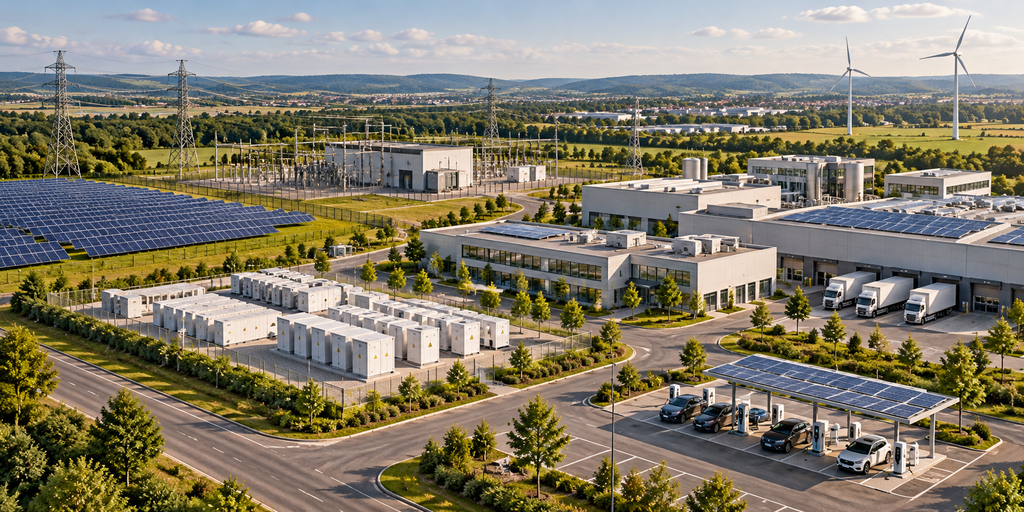
Microgrids – coordinated power systems with defined boundaries
A microgrid is a defined electrical system consisting of interconnected loads and distributed energy resources, operated through coordinated control. It has an identifiable electrical boundary and can be managed as a single controllable entity in relation to the surrounding grid.
Microgrids may be found in industrial facilities, large campuses, critical infrastructure or remote power systems. Their architecture can include multiple generation technologies, battery storage, medium- and low-voltage distribution networks, protection systems and dedicated automation and control functions.
An important distinction is the operating capability of the system. A microgrid may operate connected to the public electricity network and, if specifically designed and equipped for it, can also transition to independent island operation.
Island operation introduces additional technical requirements. Without support from the external grid, the microgrid must maintain its own balance between generation and consumption while controlling voltage and frequency. This requires suitable grid-forming resources, coordinated control strategies, adapted protection concepts and carefully engineered transition and reconnection procedures.
Not every distributed energy installation is a microgrid, and the presence of solar generation and battery storage alone does not establish islanding capability.
A microgrid is not defined by the number of connected energy resources, but by its electrical architecture, coordinated control and defined operating capabilities.