
What makes a grid smart?
A smart grid combines the electricity network with measurement, communication and control. It helps operators understand what is happening across the grid and respond as conditions change. Power lines carry electricity. Communication networks carry information. Together, they help coordinate generation, storage and consumption — while keeping the network within its operating limits.
Why the grid is changing
For decades, electricity grids were largely designed around centralized power generation, with electricity flowing from large power plants through transmission and distribution networks to consumers. Grid operation followed relatively predictable generation and demand patterns.
Today, this structure is changing. Large solar and wind farms, battery energy storage systems (BESS), decentralized generation and new high-power consumers are transforming how electricity flows through the network. Power flows are becoming more dynamic and, in many parts of the grid, increasingly bidirectional.
These developments introduce new challenges for power system operation. Fluctuating generation, changing load conditions and new grid connections affect voltage profiles, equipment loading and system stability. At the same time, grid codes and technical connection requirements define how generation and storage systems must behave and support the network.
Meeting these challenges requires more than expanding grid infrastructure. Advanced monitoring, secure communication, automation and coordinated control help operators make better use of existing network capacity while maintaining reliable and secure operation.
The challenge is no longer simply to transport electricity, but to manage an increasingly complex and dynamic power system.
A practical example
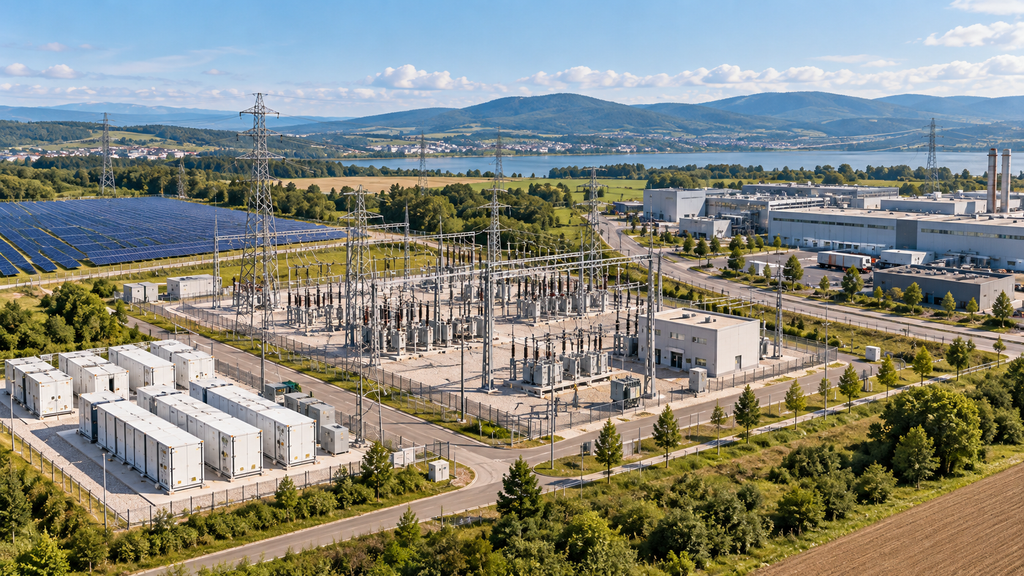
Imagine a 110/20 kV substation supplying an industrial area, with a large solar power plant and a battery energy storage system (BESS) connected to the medium-voltage network.
On a sunny day, solar generation increases while industrial demand remains relatively low. Power flows through the substation may change direction, and voltage levels or equipment loading can approach their operating limits. Later, when solar generation decreases and industrial demand rises, the situation changes again.
A smart grid uses measurements, communication and coordinated control to respond to these conditions. The BESS can absorb excess generation or supply power when needed, while power controllers adjust active and reactive power according to network requirements and available capacity.
The objective is not simply to maximize energy production, but to coordinate generation, storage and consumption while respecting grid codes, voltage limits and the technical capabilities of the network.
This is where grid physics, digital information and intelligent control come together.
From data to action
A smart grid is more than a network of connected devices and digital information. Its intelligence comes from understanding the physical conditions of the power system and using this information to support reliable and efficient grid operation.
Measurements from substations, generation facilities and network assets provide visibility into power flows, voltage levels and operating conditions. Secure communication connects these systems, while automation, local controllers and control centres transform information into coordinated actions.
There is no single controller managing the entire grid. Intelligence and control are distributed across different levels, each with specific tasks and responsibilities. From local voltage regulation and power control to system-wide monitoring and grid management, these functions must work together while respecting physical limits and grid requirements.
The real value of a smart grid is not simply collecting more data, but turning information into intelligent decisions – enabling a more reliable, flexible and resilient power system.