
The future of electric mobility is not just about charging vehicles. It is about building an intelligent energy ecosystem where charging infrastructure, power grids and connected energy assets work together to manage growing power demands, optimize energy flows and support reliable grid operation.
When EV charging becomes a grid topic
Electric mobility is more than charging a car. It connects the movement of people and goods with electrical infElectric mobility is transforming more than transportation. As charging power increases and charging networks expand, energy and mobility systems are becoming increasingly interconnected.
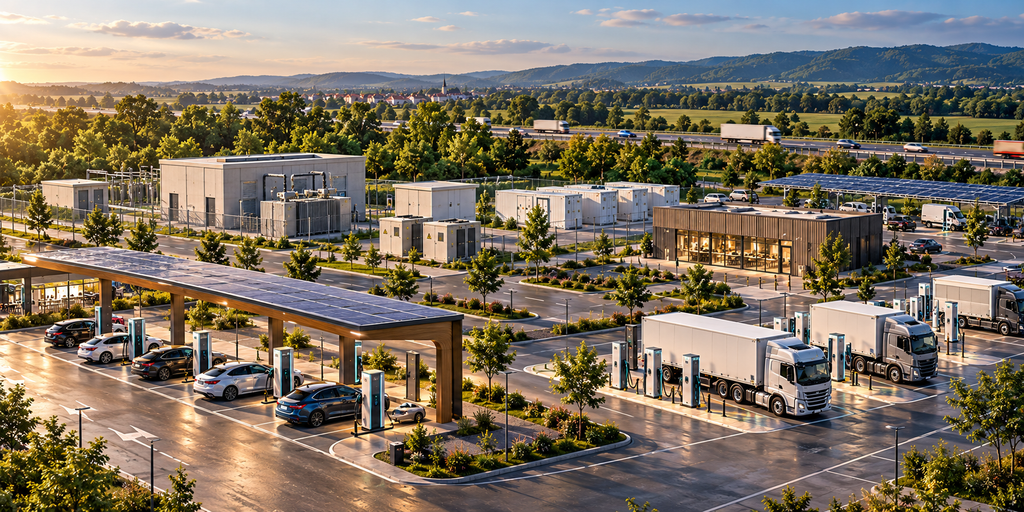
A single charging unit is an electrical device. A large charging site, however, is an interconnected energy infrastructure combining multiple charging units, transformers, medium- and low-voltage distribution, protection systems, measurements, communication and control technologies.
This is particularly relevant for public high-power charging stations along highways, logistics hubs, commercial fleets and heavy-duty vehicle charging facilities. These installations must deliver substantial electrical power while operating within the technical limits of the available grid connection.Unlike conventional electrical consumers, charging infrastructure introduces highly variable and sometimes rapidly changing power demand. Vehicles arrive, connect, charge and depart, while the available electrical capacity remains subject to network and operational constraints.
The challenge is no longer simply to provide charging points, but to operate charging infrastructure as part of the electrical power system.
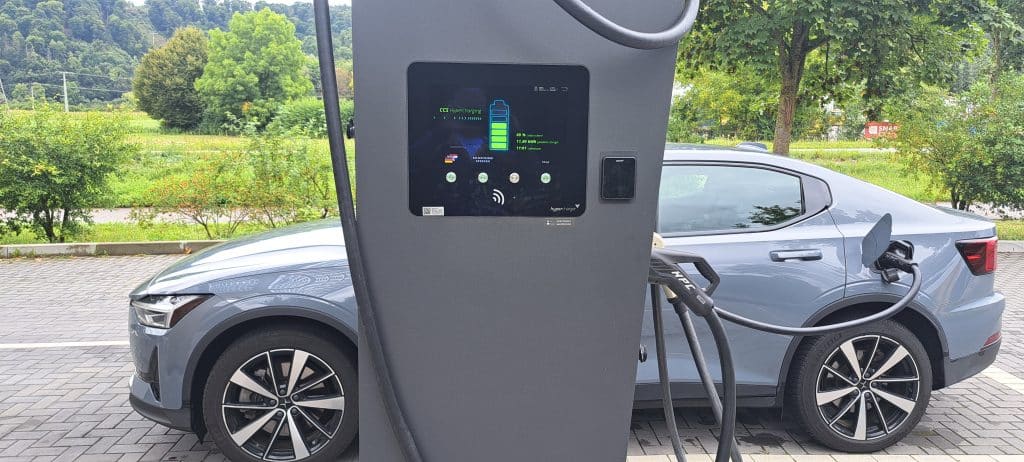
Photo: Saša Trivunović.
High-power charging and grid connection challenges
Modern high-power charging sites can reach power demands of several megawatts. Depending on the location and available network capacity, this may require dedicated transformers, medium-voltage connections and extensive electrical distribution infrastructure.
At highway service areas, vehicles arrive with different battery conditions and charging requirements. Demand can change rapidly as vehicles connect, charge and depart. Logistics and fleet depots introduce additional challenges through scheduled departures, simultaneous charging and operational availability requirements.
The total installed charging capacity does not necessarily correspond to the power available from the grid. Transformer ratings, grid connection agreements, network operating conditions and external power limitations determine how much electrical power can be used at a particular moment.
Grid expansion is not always the most practical or economical solution. Coordinated charging, intelligent power allocation and the integration of local battery storage or renewable generation can help make better use of existing infrastructure, reduce peak loads and, under suitable conditions, avoid or postpone network reinforcement.
Compliance with grid connection requirements is equally important. Charging infrastructure must respect technical operating limits and may need to respond to power reduction requests from grid operators or other authorized control systems.
Successful high-power charging infrastructure requires an understanding of both charging demand and grid limitations.
From individual chargers to coordinated infrastructure
When dozens or hundreds of charging units operate at one location, managing individual chargers independently is no longer sufficient.
A site-level control system must coordinate the available electrical power across multiple charging units while considering the capabilities and operating conditions of connected assets.
Dynamic Load Management (DLM) can distribute available charging power according to site limits, priorities and actual demand. This helps prevent transformer overloads, manage peak loads and respond to changing grid conditions.Large charging installations may require control at multiple levels. Individual charging units operate within their technical limits, charging groups share available power, and a site-level controller coordinates the overall electrical demand.
At a higher level, energy management systems, charging point operators or grid operators may provide additional operating schedules, power limits or control requirements. These different control levels must interact without conflicting responsibilities or exceeding the available grid connection capacity.In more complex installations, charging infrastructure may also interact with battery energy storage systems, renewable generation and other flexible consumers. Energy management and power control functions have different responsibilities but must operate as part of a coordinated system.
Reliable measurements, secure communication and interoperability are essential. Charging sites may combine equipment from different manufacturers, using different communication protocols and operational requirements.
Eyes on the grid. Eyes on the assets.
A coordinated control architecture connects both worlds, respecting electrical network constraints while managing the operational requirements of charging infrastructure.
Heavy-duty charging and the next generation of infrastructure
The electrification of trucks, buses and commercial fleets introduces a new dimension to charging infrastructure. Heavy-duty vehicles require large amounts of energy, often within limited charging windows. Megawatt-class charging technologies can significantly increase the electrical demands placed on logistics depots, transport hubs and highway charging locations.For long-distance transportation, charging infrastructure must support high charging power and short, predictable stops. At fleet depots, charging strategies are closely linked to vehicle schedules, departure times and operational availability.These applications require more than simply installing higher-power chargers. Transformers, electrical distribution, protection systems, communication networks and control technologies must be designed to handle the combined demands of multiple charging units.
The integration of battery storage, renewable generation and coordinated energy management can introduce additional flexibility. However, the electrical infrastructure must still operate within its technical limits and comply with applicable grid connection requirements.As charging infrastructure grows in scale and complexity, scalability, interoperability, cybersecurity and operational reliability become increasingly important.
E-Mobility is no longer just about charging vehicles. It is about integrating transportation into the energy system.